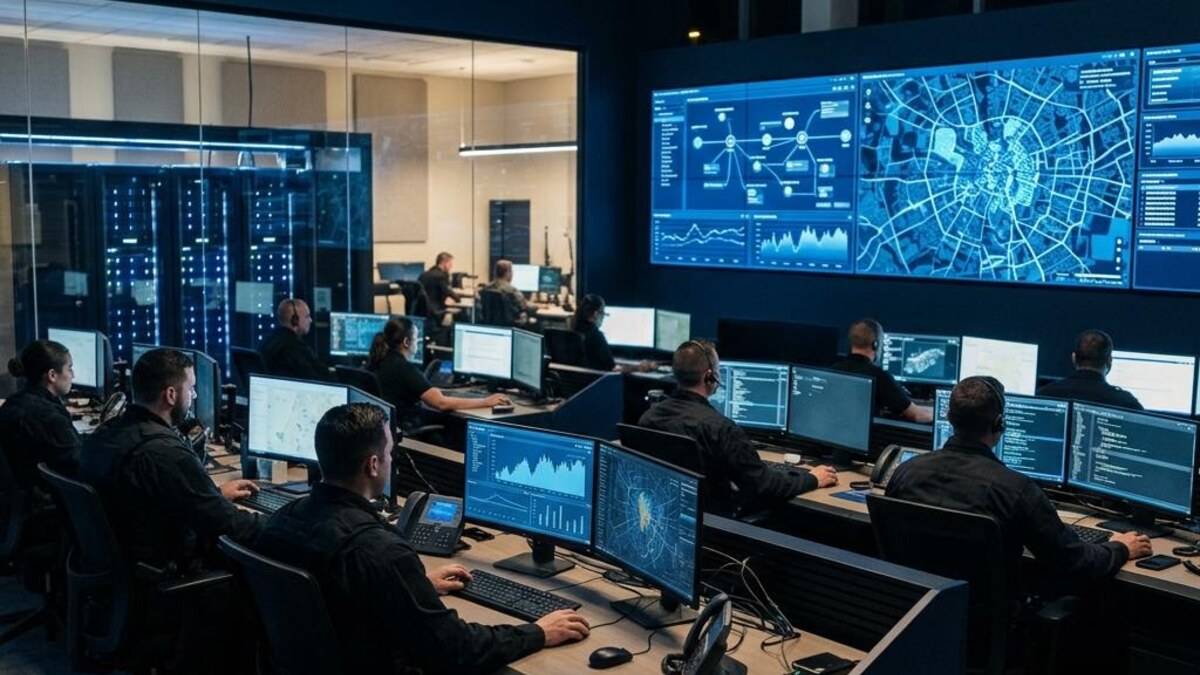
At 2:13 a.m., a supervisor gets a call that turns a routine shift into a major case. Patrol has multiple scenes, detectives are being pulled in from home, digital evidence is already coming in, and command staff wants updates before sunrise. In that moment, nobody cares about a slick demo or a vendor's pitch deck. They care about whether the system can handle real volume, real pressure, and real accountability.
That is the difference between software that looks good in a sales meeting and software that holds up inside a law enforcement agency. Enterprise law enforcement is not theoretical. It is layered approval chains, CJIS requirements, role-based access, multi-unit coordination, audit trails, retention policies, and years of case history that cannot disappear when a startup changes direction. Agencies do not need a flash in the pan. They need a platform built to last.
That is where ShieldView fits. We are not trying to be the latest novelty in public safety tech. We are built for agencies that need staying power, operational depth, and a system that can support serious investigative work over time.
Enterprise law enforcement is a real operating environment
There is a tendency in software to talk about law enforcement as if every agency has the same needs. Anyone inside the work knows that is not true. A small pilot project is one thing. Running a platform across units, supervisors, records staff, analysts, command staff, and partner agencies is something else entirely.
Enterprise law enforcement has real complexity. A case rarely lives in one lane. Patrol may start it. Detectives may pick it up. Crime analysis may add context. Digital evidence may come from outside systems. Prosecutors may need exports later. Supervisors need visibility without stepping on investigative control. Records units need consistency. Administrators need reporting and oversight. IT needs confidence that the platform will meet policy, security, and reliability expectations.
That is why one-trick tools tend to hit a wall. A product may solve one narrow pain point well, then struggle when it has to support the rest of the workflow. Agencies end up stitching together disconnected systems, duplicating data entry, and relying on workaround after workaround just to keep cases moving. That creates friction where there should be clarity.
ShieldView was built with the full operating environment in mind. Case management in law enforcement is not just about entering an incident. It is about how information moves, who can see it, how it is reviewed, how it is retained, and how it stands up months or years later. If a platform cannot support that reality, it is not enterprise-ready, no matter how polished it looks on day one.
Not a flash in the pan, and not a one-trick pony
Law enforcement agencies have seen this pattern before. A new vendor arrives with a big promise, a sharp interface, and a narrow use case packaged as a complete answer. The first few demos go well. A pilot starts. Then the hard questions come.
Can it handle cross-unit workflows? Can it support complex permissions? Can it maintain a reliable audit trail? Can supervisors review activity without creating bottlenecks? Can the system adapt to established policy instead of forcing the agency into a generic workflow? Can the vendor support implementation beyond the first contract cycle?
Those questions matter because agencies are not buying software for one quarter. They are making an operational decision that affects investigations, reporting, compliance, and continuity. In this environment, staying power matters as much as features.
When we say ShieldView is not a flash in the pan, we mean we take the long view seriously. Agencies need a partner that understands procurement cycles, security review, change management, training, and rollout in live environments. They need consistency. They need a roadmap grounded in actual field use, not trend chasing.
When we say we are not a one-trick pony, we mean the platform is designed to support how agencies really work. That includes the day-to-day case tasks people perform over and over, and the higher-level oversight leaders need across teams and timeframes. It means supporting operational detail without losing administrative control.
Enterprise software for law enforcement should do a few basic things well:
- Support end-to-end case workflows, not just one step in the process.
- Handle role-based access and auditability in a way that matches agency accountability.
- Work across units and reporting structures, without forcing everyone into the same mold.
- Stand up over time, through policy changes, staffing changes, and growing data volume.
- Reduce fragmentation instead of adding one more disconnected tool.
That list is not flashy. It is not supposed to be. It is what serious agencies actually need.
What real enterprise readiness looks like in practice
For a law enforcement platform, enterprise readiness is not just a security checklist or a hosting decision. It shows up in the daily experience of the people using it.
A detective should be able to find the full case picture without chasing information across multiple systems. A supervisor should be able to review activity, track progress, and identify gaps before they turn into problems. Records staff should not have to clean up avoidable inconsistencies caused by poor workflow design. Command staff should have enough visibility to understand workload and outcomes without requiring staff to build reports by hand every time a question comes up.
It also means agencies should not be trapped between ease of use and operational rigor. That tradeoff is often presented as inevitable. It is not. A platform can be intuitive and still reflect the controls that law enforcement requires. It can help users move quickly while preserving accountability.
That balance matters most when the workload increases. High-volume incidents, major investigations, task force coordination, and long-running cases expose weak systems quickly. If users have to create side spreadsheets, email updates around the system, or maintain parallel records to get the job done, the platform is not carrying its weight. The software should reduce that burden, not create it.
Long-term viability matters too. Agencies invest significant time in implementation, policy alignment, training, and adoption. Replacing a system is expensive, disruptive, and risky. That is why enterprise buyers look beyond feature lists. They look at whether a vendor understands the stakes of institutional use. They look for signs of durability, seriousness, and product direction that matches the real demands of public safety operations.
That is the standard we hold ourselves to at ShieldView. We are building for the agencies that need more than a good first impression. They need depth. They need reliability. They need a platform that respects how law enforcement work is actually done, and how much is riding on getting it right.
The practical takeaway
If your agency is evaluating case management technology, do not stop at the demo. Ask what happens after rollout. Ask how the system handles complexity, not just simple use cases. Ask whether it supports the full chain of work, from field activity to supervision to long-term case retention. Ask whether the vendor is built for the realities of enterprise law enforcement, or just built to sound good in a meeting.
The right platform is not the one with the loudest pitch. It is the one that still works when the case gets complicated, the workload spikes, and the scrutiny increases. That is the test that matters. Build around that standard, and you will make a better decision for your agency.
Built for the way your agency works
Explore how ShieldView supports case workflows, oversight, and long-term operational needs across your agency.